
|
||
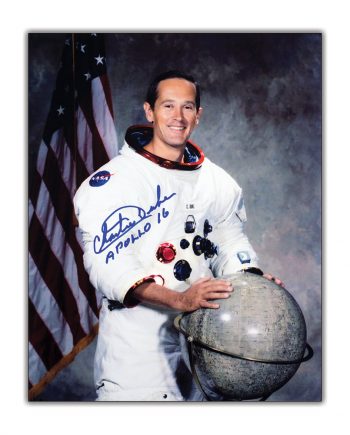
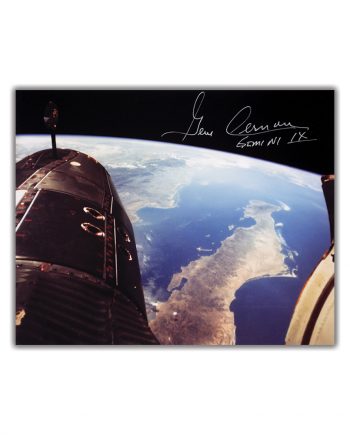
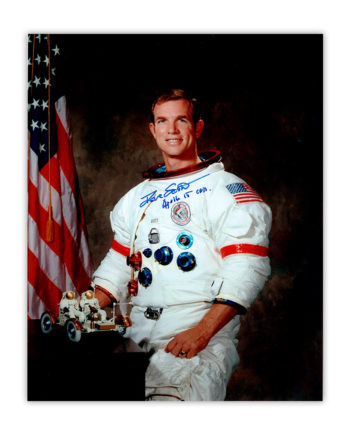
LOOK FORRareness of AutographHard-to-get autographs are of course more valuable (in general) than easily obtained autographs. Exceptions: Babe Ruth signed often, but his signature is valuable because of his fame, and the fact that he is deceased. If Neil Armstrong signed more frequently, (he doesn't now but used to) his signature would still be valuable because of what he did. Ruth and Armstrong aren't hard to obtain, just expensive. Bold, Legible SignatureThe autograph should be able to be seen. Some autographs are necessarily in pencil (on art prints, for example) or in ball point pen, but the best ones are done in felt tip, or "sharpie." Metallic pens, gold or silver, often look great, too. The autograph should give good contrast to the background (dark signature on light area, or white-metallic signature on dark area) Pencil, pen and metallic pens don't fade, but some sharpies and other felt tip pens do, particularly older (pre-2000) ones. Blue seems to be the most stable. Germane to FameA photo of the celebrity in action is preferable. A signed portrait of Lindbergh, for example, is preferable to a signed check, but a signed picture of Lindbergh next to his plane would be even more desirable. The autograph is most valuable when the celebrity is shown doing what they're famous for (i.e.: at bat, acting, walking on the moon) DocumentsAutographed documents are of two types: DS and ALS. DS (Signed document) is a document with a written signature, such as a typewritten letter, canceled check, contract, or even a marriage license or divorce decree whereas an ALS (autographed letter signed) is an entire letter or note handwritten and signed. ALS is generally worth more, and points are given for content for both ALS and DS. If Lindbergh wrote a letter to his financial backers about this flight, it would be worth more than correspondence to his mother. Other Autographed ParaphernaliaSigned baseballs are a good example of "paraphernalia." Signed jerseys, caps, movie props, clothing or uniforms can be as germane and valuable as any other autographed item. Multiple Signatures"Team" autographs, or several related autographs on a single photo or piece of memorabilia, are desirable because of the difficulty in assembling groups, and having more than one desirable autograph in one place. Also, authenticity is usually not a problem with multi-sigs since a forger or other impostor among the group is obviously impossible (if signed concurrently.) Even if the "team" signatures have to be obtained piecemeal, the item has to be sent to individuals, reducing the chance of forgeries or autopens. Inscriptions and PersonalizationsThis seems to be a matter of personal preference. Many collectors actually prefer their autographs to be personalized, even if it's to someone else. Indeed, many autograph price guides give the same or similar valuations to a piece regardless of whether or not it is inscribed. ,Inscriptions most often authenticate a piece. Some reluctant (free) signers, astronauts John Glenn and John Young, for example, often refuse to sign anything uninscribed (first and last name) to discourage commercial dealers. Nevertheless, these inscribed and personalized items are bought and sold with regularity. Dealers often abbreviate: ISP--inscribed signed photo CISP--color inscribed signed photo. Color or Black and White?Color is generally preferred in photos, but often black and white is the only thing available, especially on older autographs. Color was available, but generally expensive until the 1960s. Old color often fades, even in the dark, whereas black and white won't, and is usually sharper. CoAS and AuthenticatorsAnyone can print up a fancy Certificate of Authenticity, and they often make a sale; but they aren't legal documents, prove nothing, and may not be worth the paper they are printed on. Likewise, "authentication services" can take your money, pronounce an autograph authentic or bogus and be dead wrong. Both authenticators and CoAs can lead the collector into a false sense of security. Save your money, and just buy from a reputable dealer. Make sure you know about the ISSUER of the CoA, how long have they been in business? reputation? experience? guarantee? specialization? COLLECTOR RESOURCES:collectSpace.comUACC.org Universal Autograph Collectors Club Stephen Beck's autograph page Chris Spain's autograph page Autograph Magazine |
WATCH OUT FORAutopensAutopen machines are similar to pantographs, where a metal "matrix" is manufactured from an actual signature, then tracked, while a pen, pencil, sharpie or other writing instrument transfers the tracked signature matrix to paper or photo. Autopen machines are generally made for small documents, such as 8x10 photos, or letters. The most infamous usage of autopens is with NASA, who issues an autopen machine to every astronaut. Depending on the astronaut's notoriety, he or she may have up to several different matrixes, each done from a slightly different signature. Autopen signatures have a couple of giveaway flaws: First, they are often done in Sharpie, which hides the fact that the machine signatures are of a consistent line width from beginning to end, due to the unchanging pressure-- not the case with actual signatures, which will show some variance of line width, particularly at the end of strokes. Indeed, autopens will often show a wider spot, or "dot" at the beginning and end of the signature, where the pen was placed on the paper, and where it stopped and was lifted off the paper. Second, autopenned signatures will be EXACTLY the same every time, from a given matrix. This is sometimes disguised by movement (intentionally or not) of the paper. Still there will be the same spacing, height of letters, length of signature, etc. Autopens can be sniffed out and confirmed if two signatures are identical. Humans aren't that precise. It's impossible for a live person to generate identical signatures even if they try. Most of these autopens are documented, and are easily recognized by competent dealers or collectors. Click HERE to see Chris Spain's collection of astronaut autopen images for reference. Forgeries, SecretarialsTougher to detect than autopens, a great forgery may be indistinguishable from the genuine article. Particularly prevalent in sports autographs. That's why a pedigree and/or a buying from a reputable dealer is important. It may take time to uncover a forgery, as a bunch of suspect signatures bearing the same flaws, or "tells" need to be examined to make a judgment. "Cuts" are always suspect to us. A "cut" is a "bare" autograph on a piece of paper, sometimes cut out of an autograph book or some other document. a forger can practice a signature, and "cut" a masterful one, whereas it would be harder to forge a photo, particularly if there are multiple signatures (see above). Secretarials are items signed by secretaries or other assistants. A keen eye can spot these, as they are usually not as masterful as a good forgery. There has been a rash of forgeries, particularly of Neil Armstrong, or the Apollo 11 crew at online auctions recently. The seller may or may not know, but they are easily spotted by their reliance on "3rd party authentication" particularly by sports authentication services (we worry about sports autographs especially). These services authenticate sometimes laughable forgeries for a fee, as long as the name is spelled right. Since forgeries are always subject to interpretation (unlike autopens) these services, and the auctions themselves, steer clear of legal problems and the collector is left holding the bag. Printed Signatures, Rubber StampsThese are pretty easily recognized. Printed signatures show no "sheen" or indentations and can be spotted under a "loupe" or magnifier as being part of the printed product. Rubber stamps are often uneven, show square borders, smears, and are always the same, like a poor man's autopen. MAINTAINING VALUEIf you want to make sure you maintain the value absolutely, never let your collectible see the light of day. Put it in a safe deposit box, wrapped in archival materials, and never display it! We recently had a photo customer do just that: A color copy was made first, and that was elegantly framed for display. Even conventional framing of an item will cause it to lose value to hardcore collectors. Display of dimensional items (baseballs, jerseys or other paraphernalia) is difficult to achieve without attaching something to the item or vice-versa, and difficult or impossible to make a displayable replica of. Ultimately, you should strike some sort of balance between your need to savor (and show off) your collectible and maintaining it in an unadulterated state. A crinkled, dented photo may be unaltered, but we would dry mount it (to archival materials) to flatten it out and make it more presentable. To us, this makes it more valuable by being more desirable, stable and presentable. Likewise, an attractive display of the goods that is made to last itself (conservation, archival or museum framing) is in our minds, the best possible balance. |
|
Pioneer and Apollo Astronaut Autographs
Autograph Collecting for Dummies
| |||||||||||||||||||||